

DEMING – Federal agriculture officials have lifted New Mexico’s only New World screwworm infested zone, ending special animal movement restrictions that had been in place following the state’s first confirmed case earlier this summer.
The decision is significant for livestock producers and pet owners across New Mexico, including Luna County, where agriculture, ranching and the movement of animals across southern New Mexico are an important part of the local economy.
The U.S. Department of Agriculture’s Animal and Plant Health Inspection Service announced Sunday, August 30, that it approved the release of the state’s New World screwworm infested zone following a recommendation from New Mexico State Veterinarian Dr. Samantha Holeck and the New Mexico Livestock Board.
New Mexico’s first and only confirmed case of New World screwworm myiasis was detected June 7 in a dog. According to APHIS, no additional cases have been detected since then.
Following the June detection, state and federal officials established an infested zone and implemented measures that included animal movement requirements and inspections, wildlife and fly surveillance, and strategic releases of sterile New World screwworm flies.
Federal and state animal health experts determined that New Mexico has now met the requirements necessary to release the zone.
The change removes New World screwworm-related requirements on domestic movement of livestock and pets from the affected area. Producers and animal owners can resume normal interstate and intrastate movement without the additional screwworm inspections required under the response.
For Luna County livestock owners, the announcement does not mean surveillance is ending. APHIS said fly trapping and wildlife surveillance will continue in New Mexico to watch for any future introduction of the parasite.
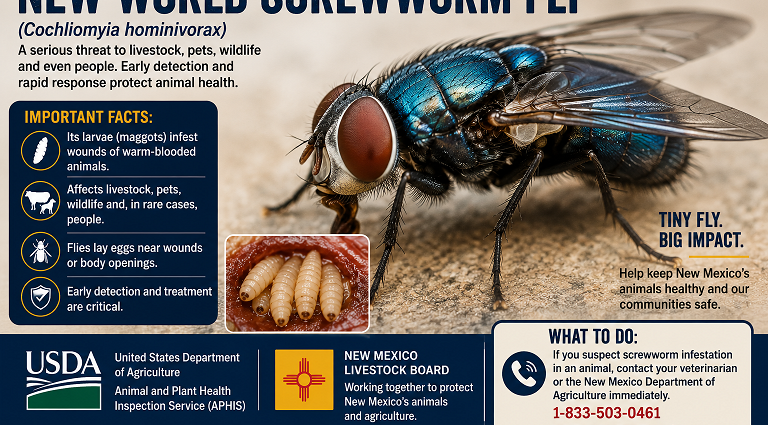
New World screwworm is particularly concerning to ranchers and animal owners because its larvae infest wounds or other openings in living animals and feed on living tissue. Livestock, wildlife and pets can be affected.
USDA officials credited cooperation between federal and New Mexico animal health officials with containing the state’s case and preventing additional confirmed infections.
The lifting of the zone may also allow federal officials to begin working with international trading partners to remove New Mexico-specific export restrictions associated with New World screwworm.
APHIS said it will continue nationwide surveillance, early detection and rapid-response efforts as officials monitor the continuing threat from the parasite.
By John Krehbiel – Bravo Mic Communications News, LLC – John@bravomic.com