

Photo Credit: Facebook posted Burney PCT Angels – Eye on Columbus
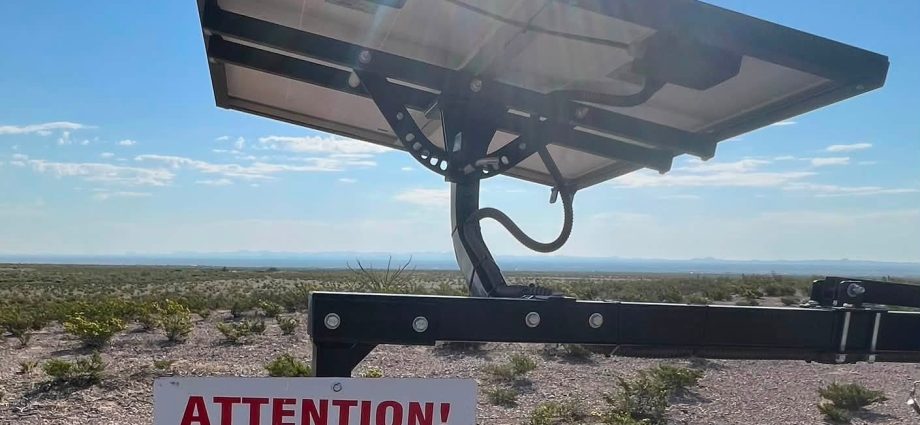
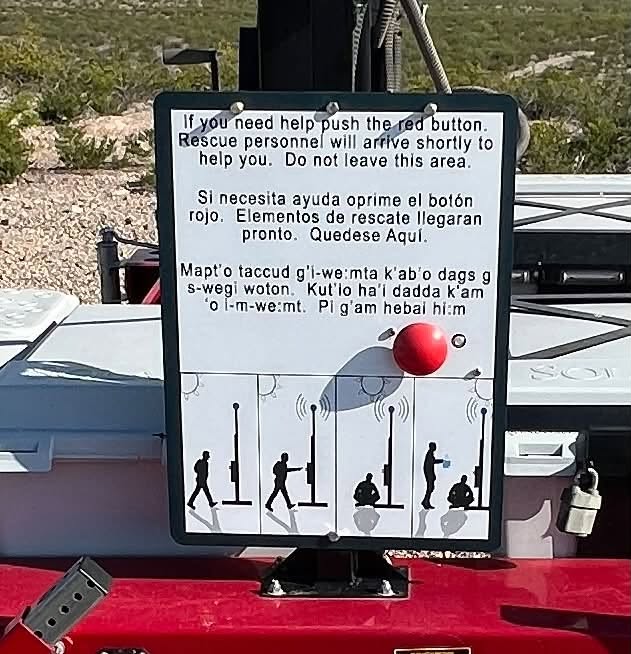
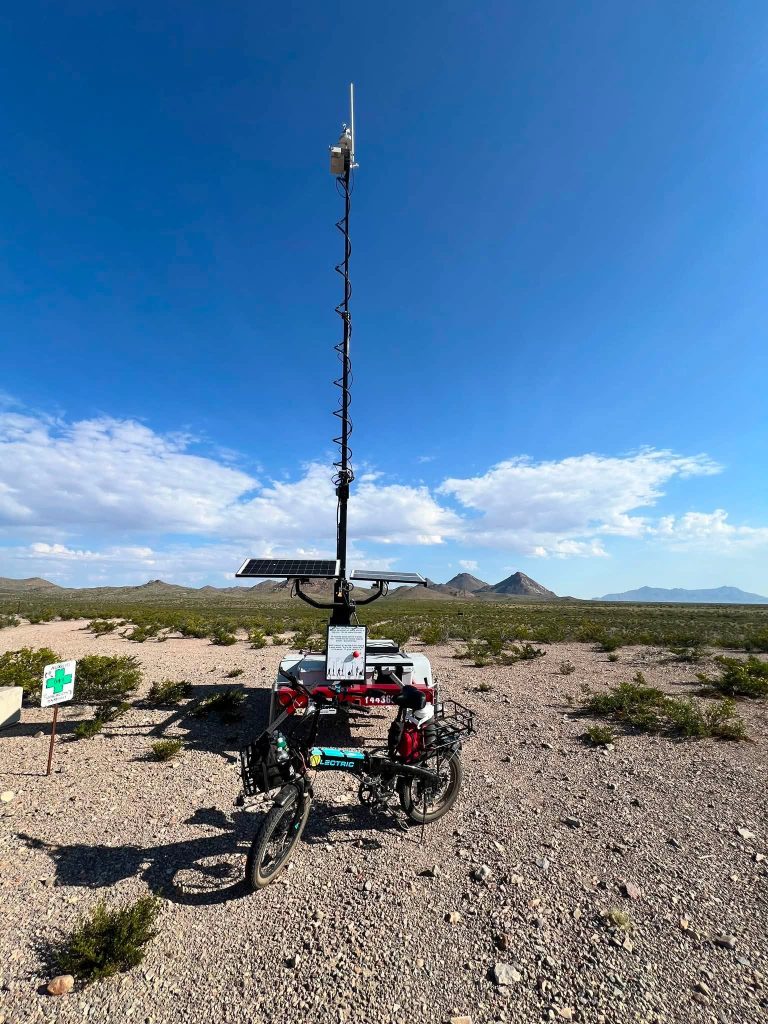
COLUMBUS, N.M. – A recently replaced emergency rescue beacon in the remote mountains south of the Hermanas area near Columbus has prompted questions about what the device is, who operates it and why its warning tells travelers they could die if they continue walking.
The answer goes back several years and is part of a U.S. Border Patrol effort aimed at preventing deaths in some of southern New Mexico’s most isolated terrain.
The device is known as a Border Patrol rescue beacon, an emergency station placed in remote areas where migrants and others who become lost or stranded may have little or no cellular telephone service.
The beacons allow someone in distress to summon help rather than attempt to continue walking through miles of desert or rugged mountain terrain.
The program is not simply activated during periods of extreme heat.
Border Patrol has used rescue beacons for years. Federal records show the El Paso Sector had five rescue beacons as far back as fiscal year 2015. In 2017, Border Patrol established what is now its Missing Migrant Program, which includes rescue beacons and 911 location placards placed in remote areas to help rescue people in distress.
A major expansion in southern New Mexico began in 2021.
That year, the El Paso Sector announced plans to deploy 15 new rescue beacons in strategic locations throughout southern New Mexico and West Texas. Four of the first 15 were installed in the Lordsburg Border Patrol Station area, making Lordsburg the first station in the sector to receive the newer rescue-beacon technology.
With five older “legacy” beacons already in operation, Border Patrol said the expansion would bring the El Paso Sector total to 20 rescue beacons by the end of 2021.
The El Paso Sector includes southern New Mexico and far West Texas.
The emergency stations are not staffed.
When someone activates a rescue beacon, Border Patrol is alerted and agents can be dispatched to the beacon’s location. The system is particularly valuable in remote areas where cellphone service may be nonexistent and where simply describing a person’s location to emergency dispatchers can be difficult.
And the system has been used in Southwest New Mexico.
In October 2021, a 51-year-old Mexican national activated one of the newly installed rescue beacons south of Hachita shortly after 10:30 p.m. Agents from the Lordsburg Border Patrol Station responded, located the man and brought him to safety.
Border Patrol said the beacons are placed in high-risk areas where migrants frequently travel and where emergency services and cellphone reception may be unavailable.
The dangers are not limited to summer heat. Federal officials cite rugged terrain, extreme temperatures, lack of water, wildlife and isolation among the hazards faced by people traveling through the region.
That also explains the stark warnings displayed on the stations. The warnings are intended to discourage someone already in distress from attempting to walk farther in search of help.
The rescue beacons are not temporary equipment installed only during periods of extreme heat. They are part of Border Patrol’s continuing rescue infrastructure and remain in remote areas throughout the year.
While the devices are primarily intended to address migrant deaths and rescues along remote border routes, their emergency function can also provide a potentially lifesaving location for anyone who becomes stranded or injured in the backcountry.
A July 2026 report from the U.S. Government Accountability Office confirmed that Border Patrol continues operating its program to reduce deaths and rescue people in distress along the nation’s borders. The GAO, however, found that CBP’s fiscal year 2025 report to Congress did not include required information showing the number of rescue beacons deployed in each area or how frequently the beacons were being used.
The most clearly documented El Paso Sector deployment figure remains the 20-beacon network announced by Border Patrol following the 2021 expansion.
So, for someone encountering one of the towers while riding, hiking or traveling through the remote desert southwest of Deming, the message is fairly simple: the equipment isn’t there to monitor the weather or provide directions.
It’s there because somebody who reaches it may need help getting out alive.
John Krehbiel – Bravo Mic Communications News – John@bravomic.com